Every week, pastors spend hours preparing sermons that are thoughtful, biblical, and impactful. The message itself is often powerful. However, despite all that effort, not everyone in the room fully understands what is being said.
In many cases, the issue has nothing to do with the quality of the message, but instead relates to barriers that prevent some people from following along, processing information, or connecting with what is being taught.
Below, we’ll cover why the message in church is strong, but not everyone can follow.
The Gap Between Hearing and Understanding
Many churches assume because folks can hear the sermon, they automatically understand it. But hearing and understanding are two very different things.
Someone may sit through an entire service without fully grasping key points because of challenges such as:
- Language differences
- Hearing difficulties
- Cultural barriers
- Technical distractions
- Unfamiliar church terminology
- Attention limitations
- Lack of context for biblical concepts
These obstacles can leave folks feeling disconnected even though the sermon itself was excellent.
Churches wanting to create a welcoming environment must think beyond delivering the message. They must also consider how folks receive it.
Language Barriers Are More Common Than Many Churches Realize
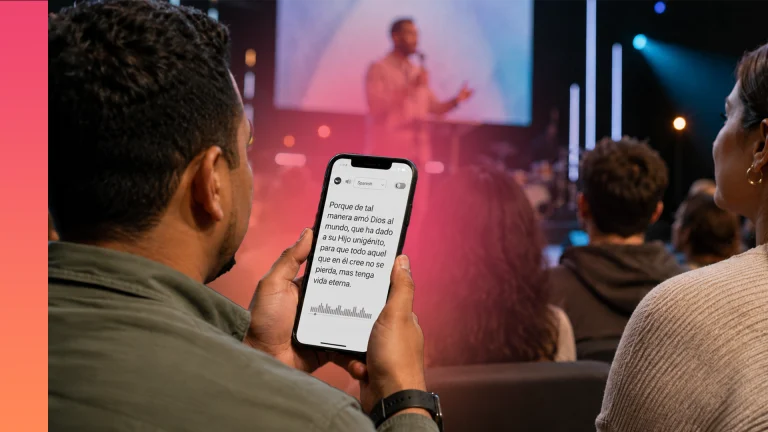
Communities across the country are becoming increasingly diverse. Many churches welcome attendees whose first language is different from the language used during services. For these visitors, following a sermon can be challenging.
Even if someone speaks conversational English well, understanding Biblical references, theological concepts, illustrations, and fast-paced teaching can be difficult.
As churches become more multicultural, providing ways for people to hear sermons in their preferred language becomes increasingly important.
Church Vocabulary Can Create Unexpected Challenges
It’s not uncommon for pastors to use phrases and terminology that feel familiar to longtime believers, but could completely feel foreign to new visitors.
Words like sanctification, redemption, justification, discipleship, and covenant carry deep meaning, but visitors may not immediately understand them.
A strong communicator can help folks understand terms by defining them, explaining concepts clearly, and avoiding assumptions about prior knowledge.
When pastors make messages accessible, more folks can engage and connect regardless of where they are in their faith.
Hearing the Message Doesn’t Mean Everyone Can Access It
Accessibility goes beyond language. Some visitors may struggle because of:
- Hearing loss
- Audio quality issues
- Poor acoustics
- Background noise
- Limited assistive technology
Some folks may find it difficult to stay engaged if they cannot clearly hear every word.
For these individuals, even a small communication barrier can significantly impact their ability to follow along with the sermon.
Creating accessible worship experiences ensures everyone has the opportunity to connect with the message.
Technology Can Either Help or Hurt
Church technology plays a big role in how effectively messages are communicated. When technology works well, it helps with translation support, live streaming, scripture displays, etc.
When technology fails, it becomes a distraction. Audio dropouts, poor microphone quality, delayed livestreams, or unclear presentation slides can all interfere with how folks retain messages.
Churches often invest in sermon preparation but overlook the systems that help people engage with the sermon itself. Both are important.
In Conclusion
A powerful sermon deserves to be understood by everyone in the room. As churches become more diverse and reach people from a variety of backgrounds, accessibility isn’t just something nice to have; it’s a necessity.
This is where Sermon Live by Sermon Shots comes in. By providing real-time sermon translation solutions, churches can make messages accessible to multilingual congregations and ensure more attendees can engage with the message being shared. When people can hear the message in a language they understand, they are better positioned to connect, grow, and fully participate in the church community.
FAQs: Why the Message in Church Is Strong but Not Everyone Can Follow
Q: Why do some people struggle to follow church sermons?
A: Some folks may face language barriers, hearing difficulties, unfamiliar church terminology, cultural differences, or technical issues that affect understanding.
Q: How can churches improve sermon accessibility?
A: Churches can improve accessibility through clear communication, quality audio systems, visual aids, and translation services.
Q: Why is sermon translation important?
A: Sermon translation helps multilingual folks understand the message in real time, making church services more inclusive and engaging.